

Maybe it came up at a routine checkup. Your liver enzymes were a little high, or an ultrasound showed fat in your liver. Your doctor told you to lose some weight and sent you home without much else to go on. You may have heard it called MASLD. That’s the new name for what used to be called nonalcoholic fatty liver disease (NAFLD), and about 1 in 3 US adults have it. During perimenopause and past menopause, your risk for developing fatty liver increases.
You may be wondering whether you have to lose a lot of weight, or whether changing what you eat can help on its own. Weight loss has the biggest effect, and losing about 5% of your body weight starts to lower liver fat. Changing what you eat helps beyond the scale and sets you up for long-term change, and you don’t need a special diet to start.
Looking for the meal plan? Jump to the 7-day fatty liver meal plan or download the free fatty liver diet plan and grocery list.
What Is MASLD? Fatty Liver’s New Name
MASLD stands for metabolic dysfunction-associated steatotic liver disease (quite a mouthful). “Steatotic” means fat build-up. MASLD is the new name for what used to be called nonalcoholic fatty liver disease (or NAFLD). In 2023, liver experts agreed on the change, partly because many felt the words “nonalcoholic” and “fatty” were stigmatizing and not fully describing the condition.
MASLD is the most common form of fatty liver disease, and it’s defined separately from alcohol-associated liver disease. A diagnosis simply means there’s extra fat in the liver along with at least one metabolic risk factor (listed below).
MASH (metabolic dysfunction-associated steatohepatitis) is the more severe type: fatty liver plus inflammation and liver cell damage. Over time, that inflammation can lead to scarring, called fibrosis. Most people with fatty liver never reach cirrhosis (severe, lasting scarring). Up to a third develop MASH within about seven years, and scarring, not fat alone, is what drives serious liver problems.
You’ll still see NAFLD and NASH in older research, and some doctors still use those names.
For many people with fatty liver, the bigger health risk is their heart. Heart disease is a more common cause of death than liver disease in people with the condition. That’s one reason the eating pattern recommended for fatty liver also supports heart health.
What Causes Fatty Liver?
Fatty liver is closely tied to metabolic health and is more common when you:
- Carry extra weight around the middle
- Have insulin resistance or type 2 diabetes
- Have high triglycerides or low HDL cholesterol
- Have high blood pressure
If insulin resistance or blood pressure is part of your picture, I cover each in insulin resistance in midlife and the 7-day diet plan for high blood pressure.
Your eating pattern is also connected, especially excess calories from saturated fat, refined carbohydrates, and sugary drinks, which are associated with fatty liver.
In a 2020 review of 18 studies, a Western eating pattern (processed food, red meat, refined grains) was linked to 56% higher odds of fatty liver, while eating patterns built on fruits, vegetables, whole grains, fish, and olive oil were linked to 22 to 23% lower odds. A separate 2025 review found that people who ate the most ultra-processed food had a 22% higher risk than those who ate the least amount.
What you ate (or didn’t eat) didn’t cause this on its own. Genes and hormones play a part, too. But if one eating pattern is linked to fatty liver, the opposite pattern is a good place to start.
Why Fatty Liver Becomes More Common After Menopause
Before menopause, women get fatty liver (and many other metabolic health conditions) less often than men. After menopause, that difference narrows, as changes in estrogen, body fat distribution, and metabolic health may all play a role.
- Fatty liver becomes much more common. After menopause, women have 2.4 times the risk of fatty liver compared with before menopause.
- Scarring tends to be more serious. Among people with MASH, advanced scarring showed up in 27.6% of postmenopausal women, compared with 14.4% of premenopausal women.
Several shifts happen at once:
- Estrogen drops. Estrogen helps control how the liver makes and burns fat.
- Fat moves to the belly. The deeper belly fat around your organs (visceral fat) increases most at the start of menopause. In one study, belly fat and insulin resistance were bigger drivers than menopause itself. I explain why in belly fat in midlife.
- Muscle drops. Losing muscle is linked to a 1.5- to 2.5-times higher risk of fatty liver and MASH, though researchers don’t yet know which comes first. Pairing resistance training with eating less helps you keep muscle while you lose fat.
For more on what’s happening with your hormones, see my anti-inflammatory diet for perimenopause guide.
How Much Can Food Help?
Weight loss has the biggest impact on fatty liver, but food and physical activity work together. Exercise can benefit the liver even without weight loss, so think of eating well and moving your body as complementary habits. I don’t often go for a walk and then crave a Dr. Pepper 🙂
The European and American liver guidelines agree on the targets, and the European one breaks down what improves at each level:
| Weight loss | For a 180-pound woman | What improves |
| 5% or more | 9 pounds or more | Liver fat |
| 7% to 10% | 13 to 18 pounds | Liver inflammation |
| 10% or more | 18 pounds or more | Liver inflammation and possibly scarring (fibrosis) |
180 pounds is about the average for US women in their 50s.
Most of these targets come from studies that looked at men and women together. In one study, people who lost 10% or more had much higher rates of MASH resolution. Researchers haven’t pinpointed the right target after menopause.
Fortunately, food helps beyond the scale. In one 18-month trial, a green Mediterranean diet (walnuts, green tea, extra plants, less red and processed meat) cut liver fat by 39%, about twice as much as a regular Mediterranean diet, even though both groups lost about 6 to 8 pounds. Only 35 of the 294 people were women, though.
No single diet is a solution. A 2024 review found Mediterranean and low-fat diets worked equally well for liver fat, and a 2026 trial found the same for Mediterranean, low-carb, and standard dietitian advice. In every group, the people who lost weight and ate less ultra-processed food saw the biggest drop in liver fat. The Mediterranean pattern is the one most often recommended because it also protects your heart and is flexible enough to stick with.
The Main Swaps: A Mediterranean Diet for Fatty Liver
The European liver guideline recommends eating “similar to the Mediterranean dietary pattern,” limiting ultra-processed foods, and avoiding sugary drinks.
Researchers think much of the Mediterranean diet’s benefit for the liver comes from its anti-inflammatory parts: fiber, olive oil, omega-3s, and the plant compounds in whole grains, vegetables, fruit, and nuts. No trial has tested an anti-inflammatory eating pattern for fatty liver by name. The studies we have tested Mediterranean-style diets, which share the same eating foundation.
So start by adding. An international panel of liver and nutrition experts put these at the top of the “eat more” list:
- Fruits and vegetables, especially deeply colored ones
- Whole grains
- Beans, lentils, and other plant proteins
- Fish and seafood
- Olive oil and other liquid plant oils
Fruits, vegetables, whole grains, and beans all bring fiber, and people who ate the most fiber had about half the odds of high liver fat.
Fruit belongs on that list. Much of the concern about fructose, a sugar in both fruit and sweeteners, comes from sweetened drinks and added sugars. In controlled trials, fruit didn’t raise liver fat the way sugary drinks did, so fruit in normal amounts, about 2 to 3 servings a day, fits right in.
If you’ve been searching for a fatty liver diet food list or a list of foods to avoid with fatty liver, this is the version I’d use, with a swap for each one:
| Swap this… | For this… | Why? |
| Soda, sweet tea, sugary sports drinks, and juice drinks | Green tea, water, unsweetened sparkling water, or unsweetened coffee | Extra sugar from drinks raises liver fat, and a sugary drink a day was linked to a 53% higher risk. Coffee is linked to lower risk. → Here are more swap ideas in my anti-inflammatory drinks and coffee articles. |
| White bread, white rice, refined sugary cereal | Oats, brown rice, whole-wheat bread, quinoa | Refined carbs are linked to fatty liver. |
| Chips, cookies, packaged snacks | A small handful of nuts (about 1 oz), fruit, or plain yogurt | In one trial, people who ate a handful of walnuts 5 or more days a week lost the most liver fat. |
| Red and processed meat most days | Fish, beans, lentils, or chicken | Red meat was linked to 27% higher odds of fatty liver. In people with fatty liver, beans and lentils were linked to fewer serious liver problems, and fish to a lower risk of death. |
| Butter and other solid fats | Olive oil, avocado, nuts, or seeds like ground flax and chia | In a trial where people ate 1,000 extra calories a day, saturated fat raised liver fat 55%, compared with 15% for unsaturated fat. |
| Foods heavy in added sugar | Fruit, nuts, yogurt, or a smaller portion | Added sugar is on the experts’ “eat less” list. The American Heart Association suggests women keep it to about six teaspoons (25 grams) a day; one 12-oz can of soda has 39 grams! |
| A nightly drink | Less, or a non-alcoholic option | Alcohol doesn’t provide a liver benefit, and less is better. The FAQ below has more on how much. |
The research on diet soda is mixed: some studies link diet drinks to fatty liver, especially in women, while a large study of postmenopausal women found no link to liver disease deaths. If you’re trying to change the habit, water, sparkling water, unsweetened tea, or coffee are simple alternatives.
You don’t need to make all seven swaps this week. Pick the one or two that fit how you already eat, and build from there. For more ideas by food group, see my easy anti-inflammatory food swaps.
A 7-Day Fatty Liver Meal Plan
Most meals build from the four parts of a balanced anti-inflammatory meal: Protein, Fiber-Rich Carbohydrates, Healthy Fats, and Colorful Fruits and Vegetables.

Day 1
Breakfast: Unsweetened Greek yogurt with berries and walnuts
For more ideas, see my anti-inflammatory breakfasts for women over 40.
Lunch: Mediterranean chickpea salad with leftover chicken and a piece of fruit
Snack: Apple with peanut butter
Dinner: Salmon with roasted potatoes and sautéed greens
Liver note: Fish in place of red meat is one of the main swaps. Cook extra salmon tonight for tomorrow’s lunch.
Day 2
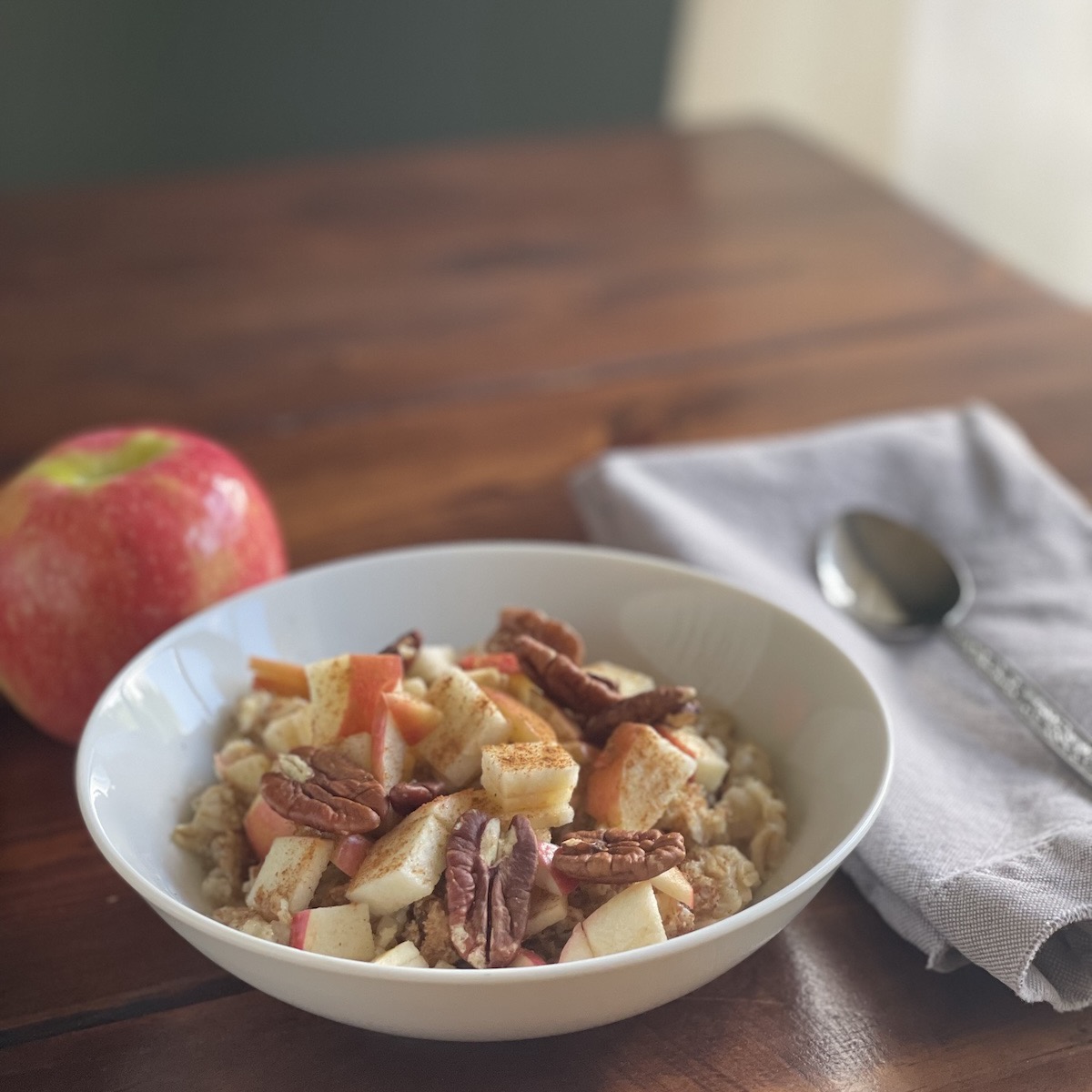
Breakfast: Five-minute oatmeal with banana, ground flaxseed, and peanut butter, with a hard-boiled egg on the side
Lunch: Leftover salmon over a big salad
Snack: Grapes with a handful of almonds
Dinner: Tacos with ground turkey and black beans, corn tortillas, fresh salsa, and a pile of shredded cabbage
Liver note: Black beans and turkey swap in for beef tonight, adding fiber, plant compounds, and plant protein.
Day 3
Breakfast: Egg scramble with sautéed vegetables over one slice of whole-grain toast
Lunch: Taco salad from last night, with the leftover turkey and beans over lettuce
Snack: Diced tomatoes with cottage cheese
Dinner: Chicken tortilla soup, made as a big pot
Liver note: Swap one soda or sweet tea a day for green tea, water, or coffee. Not ready for unsweetened? Mix sweet tea half-and-half with unsweetened, or add a splash of 100% juice to sparkling water (more ideas in my anti-inflammatory drinks article).
Day 4
Breakfast: No-bake energy bites with fresh fruit and Greek yogurt or kefir
Lunch: Leftover chicken tortilla soup
Snack: Whole-grain crackers with cheese and two squares of dark chocolate, at least 70% cacao
Dinner: Crustless vegetable frittata with fruit
Liver note: Fruit is the main carb tonight. Make a big frittata and save some for tomorrow’s lunch.
Day 5
Breakfast: Chocolate banana smoothie made with unsweetened kefir, frozen banana, peanut butter, unsweetened cocoa powder, and ground flaxseed
Lunch: Leftover frittata with a piece of fruit
Snack: Energy bites, or anything from my 12 snack ideas for women in midlife
Dinner: Leftover chicken tortilla soup with a side salad and whole-grain bread
Liver note: Leftover nights (like the soup) help you skip packaged food or fast food on a busy night.
Day 6
Breakfast: Avocado toast on whole-grain bread with tomatoes, eggs and fruit
Lunch: Mediterranean chickpea salad in a whole-grain wrap with feta and lettuce
Snack: Hummus and carrot sticks
Dinner: Tacos again, using whatever vegetables are left in the fridge
Liver note: Use the time a repeat taco night saves for a walk after dinner.
Day 7
Breakfast: Whole-wheat toast topped with a fried egg, with berries on the side
Lunch: Snack plate with hummus, raw vegetables, cheese, whole-grain crackers, and fruit
Snack: Pear with mixed nuts and two squares of dark chocolate, at least 70% cacao
Dinner: Baked chicken with roasted potatoes, broccoli, and onions
Liver note: Roast the vegetables in olive oil instead of butter. Repeat the dinners you liked next week.
Your Free 7-Day Fatty Liver Meal Plan
Prefer this plan on paper? The free fatty liver diet plan PDF has all seven days, a grocery list, and the swap table as a fatty liver diet food list you can stick on the fridge.
Frequently Asked Questions
Can Fatty Liver Be Reversed?
Yes, especially in the earlier stages. Liver fat starts to improve with about 5% weight loss, and in one study, MASH resolved in 90% of people who lost 10% or more of their body weight. Scarring can improve too, but usually it takes bigger lifestyle changes. Ask your doctor about your liver status.
How Much Alcohol Is Okay With Fatty Liver?
No amount helps the liver, and less (or none) is better. For women:
- Light drinking doesn’t protect the liver, even in small amounts
- More than about 1½ drinks a day was linked to less improvement in liver fat
- About 3 or more drinks a day is heavy drinking and should be avoided
- With advanced scarring or cirrhosis, the guidance is to stop completely
Talk with your doctor about what level of alcohol is right for you.
Do I Still Need My Doctor?
Yes. Food works alongside medical care. Your doctor can track your liver with blood tests and liver scans and tell you whether you need more treatment. If medications like GLP-1s come up, my article Do GLP-1 Medications Reduce Inflammation? looks at what the research does and doesn’t show.
Takeaways
The pattern with the most support looks a lot like Mediterranean, anti-inflammatory eating: more fiber from fruits, vegetables, whole grains, and beans, unsaturated fats in place of butter, and fewer sugary drinks, ultra-processed foods, and alcohol.
After menopause, fatty liver becomes more common and more serious, so this is a good season to start. For more on eating through midlife, see my anti-inflammatory diet for perimenopause guide, and grab the free meal plan to try this week.
Small, consistent changes matter more than following any plan perfectly. Let’s get UNstuck and stay UNstuck!