

Updated August 8, 2026: This article was refreshed with a new anti-inflammatory oatmeal formula, additional oatmeal variations, protein-boosting tips, updated FAQs, and new guidance for building a balanced oatmeal bowl.
Let’s be honest. It doesn’t matter if you know something is good for you to eat. You need tips to get your family and yourself to actually eat it!
Oatmeal can be one of the easiest anti-inflammatory breakfasts, but the toppings are what turn a plain bowl of oats into a more balanced meal. As a dietitian, I recommend building oatmeal with fiber-rich oats, colorful fruit, healthy fat from nuts or seeds, and enough protein to help make breakfast more satisfying.
Oatmeal provides fiber and beneficial plant compounds that fit well into an anti-inflammatory eating pattern. Research supports that oats also help to lower cholesterol, regulate blood sugar, and aid gut health.
Plus, oatmeal is inexpensive and easy to experiment with.
A bowl of old-fashioned oatmeal costs about $0.10 before add-ins, compared with about $0.72 for a bowl of Cheerios before adding milk. So if you try a combination and don’t love it, you haven’t wasted much; just change the toppings and try again.
This oatmeal is one of the fastest options in my full collection of anti-inflammatory recipes, most of which take ten minutes or less.
→ If you’re just getting started, grab my printable anti-inflammatory diet food list to see exactly which ingredients to keep stocked for quick meals like this.

What Makes Oatmeal Anti-Inflammatory?
Oats are a whole grain that fits well into an anti-inflammatory eating pattern. They provide soluble beta-glucan fiber along with antioxidant and plant compounds, including avenanthramides, which are found primarily in oats.
Research on whether eating oats directly lowers systemic inflammation is mixed, but oats have stronger evidence for supporting cholesterol levels, blood sugar regulation, cardiovascular health, and gut health.
Higher intakes of whole grains, oatmeal among them, are associated with a lower risk of type 2 diabetes. In three long-running Harvard cohorts following almost 200,000 adults, those eating the most whole grains had a 29% lower rate of type 2 diabetes than those eating the least. Oatmeal was measured on its own too: eating it two or more times a week was associated with a 21% lower rate than eating it less than once a month.
Gut health is less settled. A review of oat research found that around 2.5 to 3 grams of beta-glucan a day, roughly a cup and a half of cooked oatmeal, changed the mix of bacteria in the gut, though the authors note the studies are difficult to compare.
What you add to your oatmeal matters, too. Fruit, nuts, seeds, and spices can add fiber, healthy fats, protein, vitamins, minerals, and additional plant compounds while helping you build a more balanced and filling breakfast.
The Anti-Inflammatory Oatmeal Formula
Use this simple formula to build a balanced bowl of anti-inflammatory oatmeal. Start with oats, then add colorful plants, a healthy fat, a protein source, and flavor.

Ingredients You’ll Need
The best thing about this recipe is that it’s simple and uses pantry staples. You only need old-fashioned or rolled oats, water or milk, and your preferred toppings.
For this version, I used cinnamon, ground flaxseed, a small diced apple, honey, and milk (dairy or non-dairy alternative). You could easily swap the apple for frozen blueberries or another fruit you have on hand.
For a quick breakfast, I recommend old-fashioned oats or quick oats:
- Old-fashioned or rolled oats: Cook in about 2–3 minutes in the microwave and have a slightly firmer texture.
- Quick oats: Cook in about 1–2 minutes in the microwave and have a softer, creamier texture.
Plain instant oats can also work when you are especially short on time.
Steel-cut oats provide similar nutrients but usually take much longer to cook (10–20 minutes), so they are not the best choice for a breakfast designed to be ready in less than five minutes.
Which Type of Oats Should You Use?
All plain oats fit into an anti-inflammatory eating pattern, so the choice really comes down to how much time you have and what texture you like. Watch out for flavored instant packets, because they come with 8 grams of added sugar before you add anything yourself.
| Instant Oatmeal | Flavored Instant Oatmeal (Apple Cinnamon) | Quick (1 Minute) Oats | Rolled or Old Fashioned Oats | Steel Cut Oats | |
| Serving Size | 1 packet (⅓ cup) | 1 packet (½ cup) | ½ cup | ½ cup | ½ cup |
| Calories | 100 | 160 | 150 | 150 | 150 |
| Carbs | 18 g | 33 g | 27 g | 27 g | 27 g |
| Fiber | 3 g | 4 g | 4 g | 4 g | 4 g |
| Soluble Fiber | 1 g | 0.8 g | 2 g | 2 g | 2 g |
| Added Sugar | 0 g | 8 g | 0 g | 0 g | 0 g |
| Protein | 4 g | 4 g | 5 g | 5 g | 5 g |
| Cook Time: | Microwave: 1 minute | Microwave: 1 minute | Microwave: 1 to 2 minutes | Microwave: 3 minutes | Stovetop: 10 to 20 minutes |
If you want oatmeal in under five minutes, anything except steel-cut will get you there.
How to Make Anti-Inflammatory Oatmeal in 5 Minutes

Cook the Oatmeal
Add ½ cup old-fashioned oats and 1 cup water to a microwave-safe bowl (ceramic, porcelain, or stoneware).
Microwave on high for 2 to 3 minutes. Check the oatmeal after 2 minutes, then continue cooking in 30-second increments until it reaches your preferred texture. A longer cooking time will usually create softer, creamier oats.
Carefully remove the bowl from the microwave and stir.
Using quick (1-minute) oats? Microwave ½ cup quick oats with 1 cup water for about 1 to 2 minutes instead.
Add the Toppings
While the oatmeal cooks, dice one small apple and place it in a separate microwave-safe bowl. Microwave the apple for about 1 minute on high, or until slightly softened.
Stir 1 teaspoon cinnamon, 1 tablespoon ground flaxseed, and 1 teaspoon honey or your preferred sweetener into the cooked oatmeal.
Add the softened apple and up to 3 tablespoons of milk or a non-dairy alternative. Add more milk if you prefer a thinner, creamier consistency.
Stir everything together and enjoy a simple, affordable, healthy, nutrient-rich, anti-inflammatory oatmeal.
For an even more filling breakfast, add a source of protein or healthy fat such as Greek yogurt, walnuts, nut butter, or chia seeds, or add a side of scrambled eggs.
→ Pairing fiber-rich carbohydrates with protein and healthy fat can help create a more balanced meal. You can learn more about the relationship between meals, blood sugar, stress, and inflammation in my article on stress, cortisol, and inflammation in midlife.
5 Anti-Inflammatory Oatmeal Variations
Blueberry Walnut Flax: In place of the apple, use ½ cup fresh or frozen blueberries. Add cinnamon, ground flaxseed, chopped walnuts, and a small amount of honey or maple syrup. Frozen blueberries also help cool hot oatmeal quickly, which can be helpful for kids.
You can use any berry you like, including strawberries, raspberries, blackberries, or mixed berries.
Peanut Butter Banana Dark Chocolate Chip: Prepare the oatmeal as directed, then top with sliced banana, 1 to 2 tablespoons peanut butter, ground flaxseed, a few dark chocolate chips, and milk. This version is naturally sweet, filling, and works well when you want something that can satisfy a sweet tooth.
Apple Cinnamon: Top cooked oatmeal with one small diced apple, cinnamon, ground flaxseed, milk, and a small amount of honey or maple syrup. For softer apples, microwave the diced apple for about 1 minute before adding it to the oatmeal.
Berry Yogurt: Top the oatmeal with ½ cup fresh or frozen berries, ¼ to ½ cup Greek yogurt, and chia seeds or ground flaxseed. Add a splash of milk and a small amount of honey if needed. The Greek yogurt adds creaminess and extra protein.
Pumpkin Spice: Stir ¼ to ½ cup pumpkin puree into the cooked oatmeal. Add cinnamon or pumpkin pie spice, chopped walnuts or pecans, and a splash of milk. Sweeten lightly with maple syrup or honey if desired.
Choose plain pumpkin puree rather than pumpkin pie filling, which typically contains added sugar and spices.
How to Add More Protein
For a more filling breakfast, try increasing the protein in your oatmeal by:
- cooking the oats in dairy or soy milk;
- stirring in Greek yogurt after cooking;
- adding hemp hearts;
- adding peanut or almond butter; or
- mixing in a partial scoop of protein powder.
You can also keep the oatmeal simple and serve it alongside a protein-rich food. I often recommend pairing a bowl of oatmeal with 2 scrambled eggs to create a more balanced breakfast that can help keep you satisfied.
Higher-protein oatmeal idea: oats cooked with milk and topped with berries, ground flaxseed, Greek yogurt, and walnuts.
Best Anti-Inflammatory Oatmeal Toppings
Changing up your oatmeal toppings can help keep this simple anti-inflammatory breakfast in your regular rotation without getting boring.
For a more balanced and filling bowl, try including a combination of fiber, protein, and healthy fat. Then change the fruit, spices, and other toppings to create different flavors throughout the week.
| Topping Add-In | What It Adds |
| Fruit — fresh or frozen berries, apples, peaches, pears, bananas, mango, pineapple, or dried fruit such as raisins, dates, cranberries, or apricots | Fiber, polyphenols, natural sweetness |
| Pumpkin or squash puree | Fiber, beta-carotene, natural sweetness, and a creamy texture |
| Ground flaxseed | Fiber, lignans, plant-based omega-3 fats (ALA), magnesium, and some protein |
| Chia seeds | Fiber, plant-based omega-3 fats, protein, and magnesium |
| Nuts and seeds — walnuts, almonds, peanuts, cashews, pecans, pumpkin seeds, hemp seeds, or sunflower seeds | A combination of fiber, protein, and healthy fats that can make oatmeal more satisfying |
| Nut or seed butter — peanut, almond, cashew, or sunflower seed butter | Healthy fats, protein, and additional fiber |
| Greek yogurt — about ¼–½ cup | Adds protein and makes oatmeal creamy and more filling |
| Milk — dairy, soy, pea protein, or another preferred milk | Adds liquid and, depending on the type, can provide additional protein and nutrients |
| Protein powder | A partial scoop can easily increase the protein content without dramatically changing the volume of your oatmeal |
| Spices and flavorings — cinnamon, ginger, vanilla, nutmeg, or pumpkin pie spice | Adds flavor and allows you to vary your oatmeal without relying on extra sugar |
| Sweeteners — small amounts of honey, maple syrup, brown sugar, or agave | Adds sweetness when needed; you can gradually use less as your taste buds adjust to the natural sweetness of fruit |
With these add-ins, you can make a different version of oatmeal every time. Experiment with different combinations until you find a few favorites that are easy enough to keep in your regular breakfast rotation.
How Much Added Sugar Is Too Much?
Honey, maple syrup, brown sugar, agave, and molasses all count as added sugar. One teaspoon of any of them is about 4 grams of added sugar.
The Dietary Guidelines for Americans put the daily limit at around 50 grams, or 12 teaspoons. The American Heart Association is stricter: 25 grams, about six teaspoons, for women, and 36 grams, about nine teaspoons, for men.
That is the whole day, not just breakfast. A flavored instant packet arrives with 8 grams before you add anything, which is already about a third of the American Heart Association’s daily limit for women.
You do not have to jump straight to plain oats. Lower-sugar flavored packets have about 4 grams instead of 8, which is a reasonable half-step while your taste buds adjust.
FAQs
What kind of oatmeal is anti-inflammatory?
All types of plain oats fit into an anti-inflammatory eating pattern, including instant, quick, old-fashioned, and steel-cut. They all give you whole grains, soluble fiber, and naturally occurring plant compounds.
What matters more is how you prepare them. Flavored instant packets can carry several teaspoons of added sugar, while plain oats let you control the sweetness and add your own berries, walnuts, chia seeds, ground flax, and cinnamon.
The table above compares the types on nutrition and cook time.
Can you substitute with other types of oats?
Yes. Instant, quick, and old-fashioned oats all work here. Old-fashioned may need slightly more liquid or another minute, depending on the texture you like, so check your packaging.
Steel-cut is the one to skip if you are in a hurry. See the table above for cook times.
Is oatmeal an anti-inflammatory food?
Oats are a whole grain that fits well into an anti-inflammatory eating pattern. Oats provide soluble beta-glucan fiber along with antioxidant and plant compounds including phenolic acids, vitamin E, and avenanthramides.
Avenanthramides are compounds found primarily in oats, and research has shown antioxidant and anti-inflammatory potential. Research has shown they are anti-inflammatory and may help protect against heart disease, colon cancer, and skin irritation.
However, research looking at oat consumption and systemic inflammation in people has been mixed. A systematic review of randomized controlled trials found no significant overall changes in several inflammatory markers, although some benefits were seen in specific populations. For this reason, it is more accurate to think of oatmeal as one component of an overall anti-inflammatory diet rather than a food that independently “reduces inflammation.”
Oats have stronger evidence for benefits related to cholesterol and cardiovascular health, largely because of their beta-glucan soluble fiber. Regular oat intake may also support blood sugar regulation, digestive health, and a healthy gut microbiome. The fiber in oats can help support bowel regularity and prevent constipation.
Are instant oats inflammatory?
No. Plain instant oats are still whole-grain oats and can fit into an anti-inflammatory diet. They may contain slightly less fiber than some other forms of oats, depending on the product and serving size, but they are still a good source of whole grains and fiber.
The concern is usually not the oats themselves but the added sugars found in many flavored instant oatmeal packets. Choosing plain instant oats and adding fruit, yogurt, nuts, or seeds is an easy way to build a more balanced bowl.
Is oatmeal inflammatory because it’s high in carbohydrates?
No. Carbohydrate-containing foods are not automatically inflammatory. Diets high in refined carbohydrates and added sugars may contribute to inflammation, but oats are a whole-grain carbohydrate that provides fiber and beneficial plant compounds.
Pairing oats with protein, healthy fat, and fruit (such as Greek yogurt, walnuts, ground flax, or berries) can also make oatmeal more filling and nutritionally balanced.
→ You can read more about another anti-inflammatory breakfast option, smoothies.
→ If you need more quick, balanced options, check out my guide to anti-inflammatory breakfasts for women over 40.
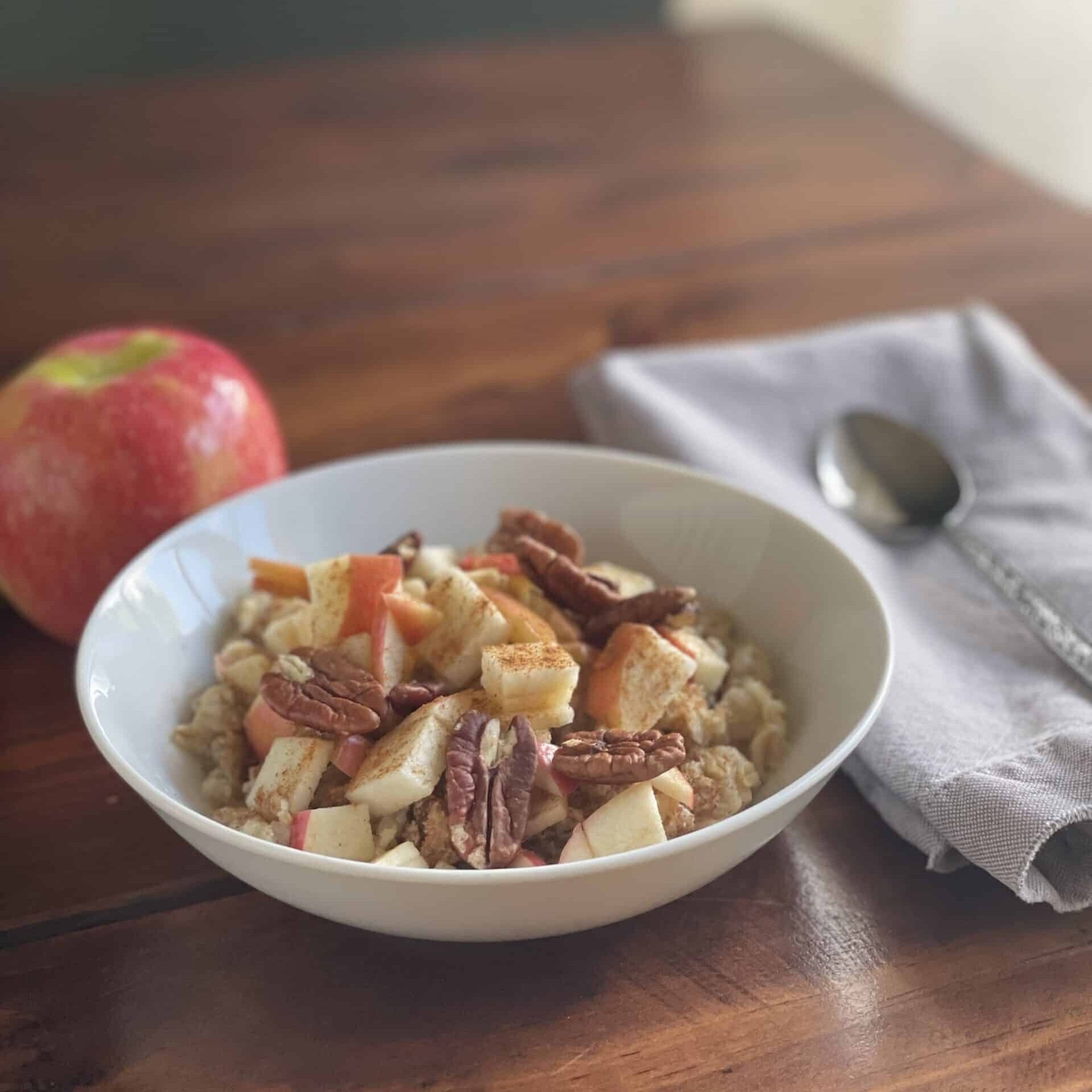
Anti-Inflammatory Oatmeal In Less Than 5 Minutes
Equipment
- microwave
Ingredients
Oatmeal
- ½ cup rolled or old fashioned oats
- 1 cup water
Oatmeal Toppings
- 1 tsp ground cinnamon
- 1 tbsp ground flax seeds
- 1 small apple (diced)
- 1 tsp honey or sweetener (if desired)
- 3 tbsp milk (dairy or non-dairy alternative)
Instructions
Make The Oatmeal
- In a microwave-safe bowl, add the old-fashioned oats and water. Cook on high for 3 minutes. (If you like firmer oatmeal, cook for less time).
- Remove from microwave and stir.
Add Toppings
- Microwave diced apple for 1 minute.
- Add ground cinnamon, ground flax seeds, and honey. Stir, add diced apple and milk. Add more milk to thin, if needed.
- Stir and enjoy.