

You don’t need fresh fruit or a special powder to make a smoothie worth drinking. Each one starts with frozen fruit, which usually costs less than fresh and won’t go bad in the fridge before you get to it.
I had my whole family taste test all four. So I can tell you which one needs the peanut butter, and which one my boys would actually drink again.
Two of them already have full recipes on the site. The numbers below come from my own nutrient analysis, not an estimate.
They run from $2.40 to $4.25 a glass.
If you want the longer version of how to build a smoothie from scratch, I wrote that here.
Four Anti-Inflammatory Smoothie Recipes
Berry Powerful Smoothie
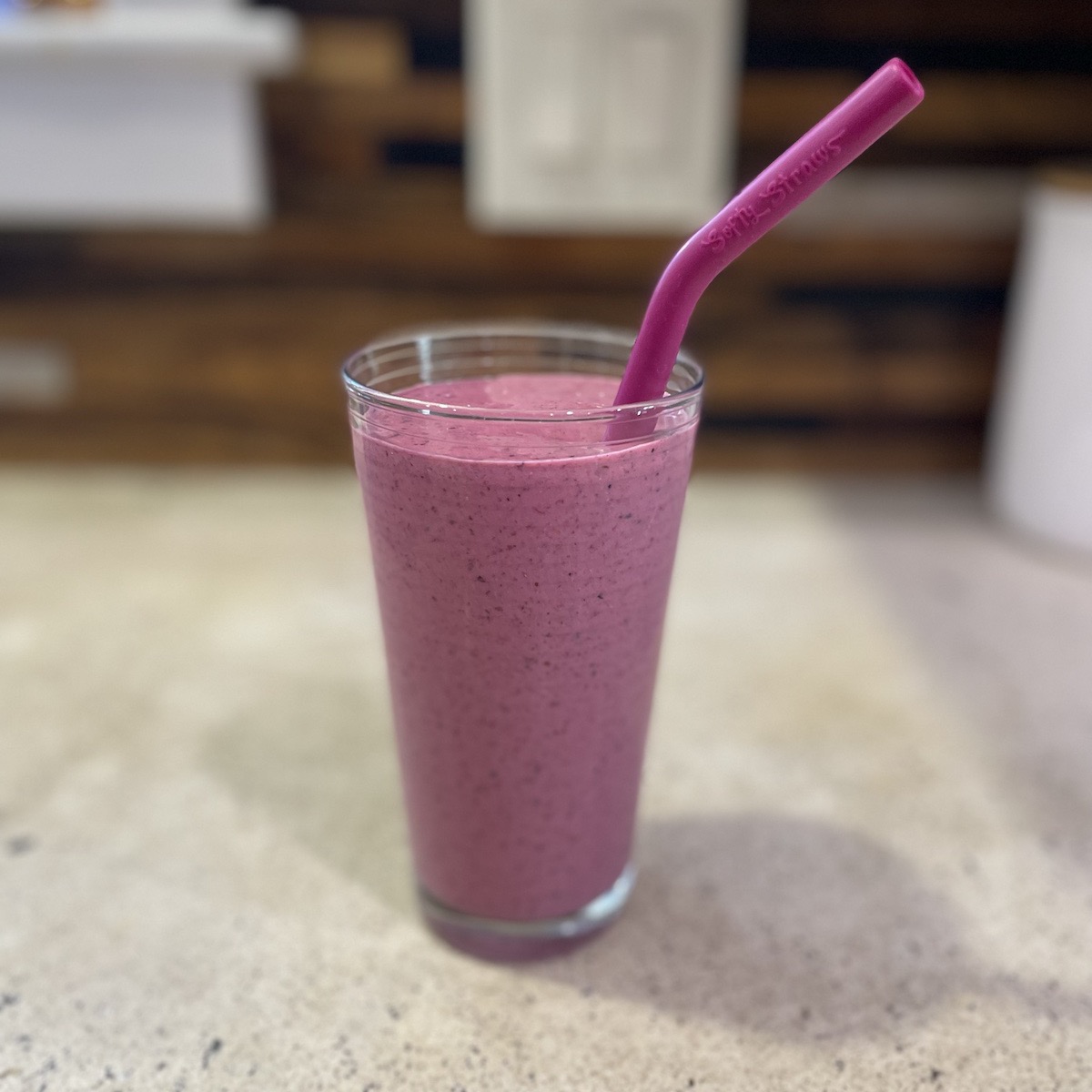
The simplest one here. Three ingredients, and it is still half a day’s fiber.
Who it’s for: Anyone who wants the shortest ingredient list and the biggest fiber boost.
What’s in it: ¾ cup 1% low-fat strawberry kefir, 1 cup frozen berry blend of blueberries, blackberries, and raspberries, 1 tablespoon ground flax seeds, and ½ cup water.
Cost: $2.40 per serving
One glass gives you 13 grams of fiber, which is half of the daily recommendation for women, for $2.40. That is the cheapest smoothie on this page, with a large dose of fiber in one glass and the shortest ingredient list.
The berries are the smoothie’s star. A cup of that blend carries 310 to 330 mg of anthocyanins, the red and purple pigments in the fruit itself, and the research shows a clear benefit starting at 50 mg a day. You are well past it in one glass.
Swap to unsweetened kefir if you want to remove the 6 grams of added sugar entirely.
→ Full recipe, with the nutrient breakdown
Tropical Smoothie with Riced Cauliflower
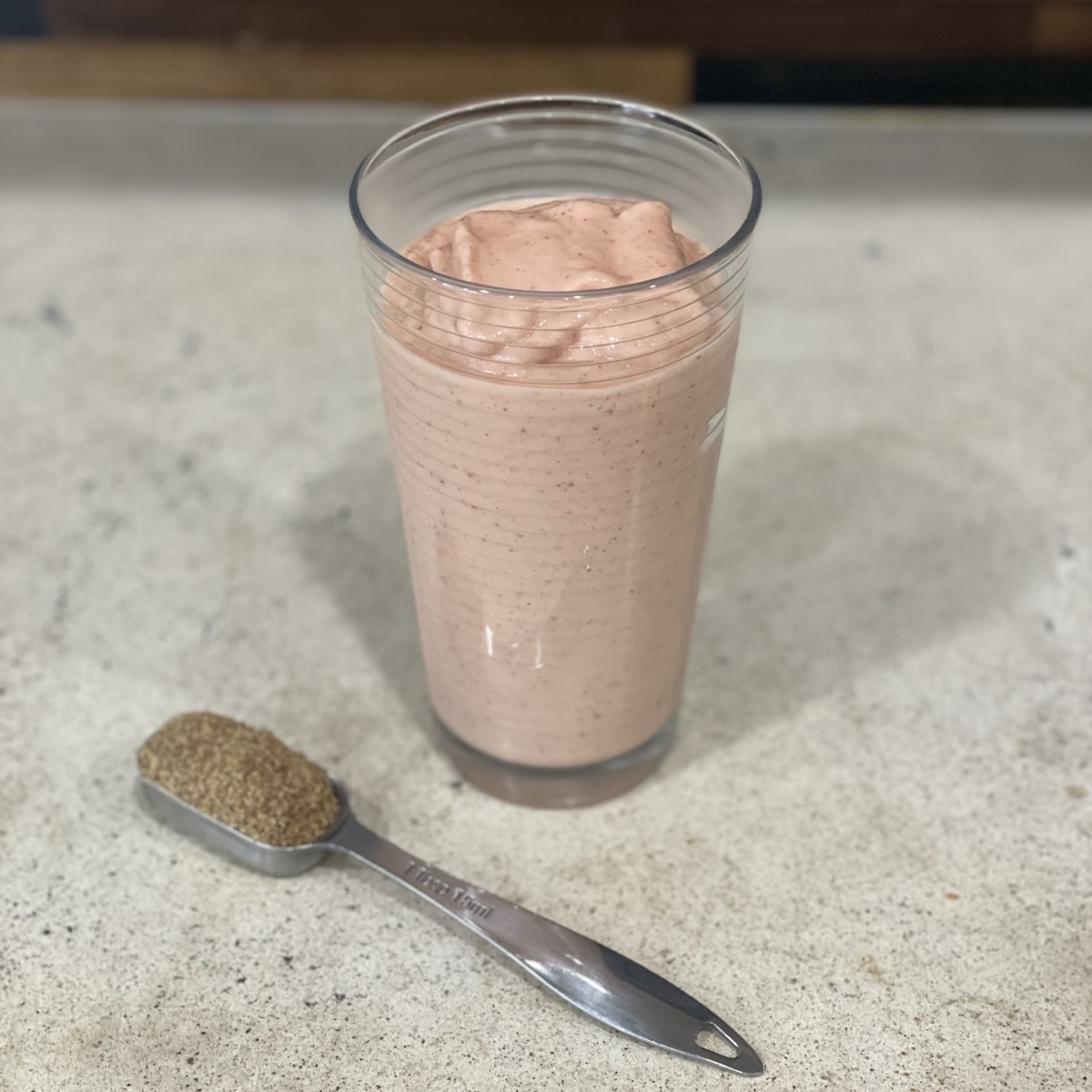
My family tasted this one after the bean smoothie, and everyone gave it a 10/10! One child asked me to make him a full one just for him.
Who it’s for: Anyone who wants to add a vegetable without tasting it.
What’s in it: 1¼ cups frozen tropical fruit mix, ¼ cup frozen riced cauliflower, 2 tablespoons ground flax, 1 cup kefir, 4 fl oz Ripple unsweetened pea milk, 3 whole strawberries.
Cost: $3.50 including the strawberries
This one covers all four parts of my smoothie formula. Kefir and pea milk provide protein, the fruit and cauliflower add color and fiber-rich carbohydrates, and ground flax contributes fiber and healthy fats. At ¼ cup, the cauliflower thickens the smoothie without changing its tropical flavor.
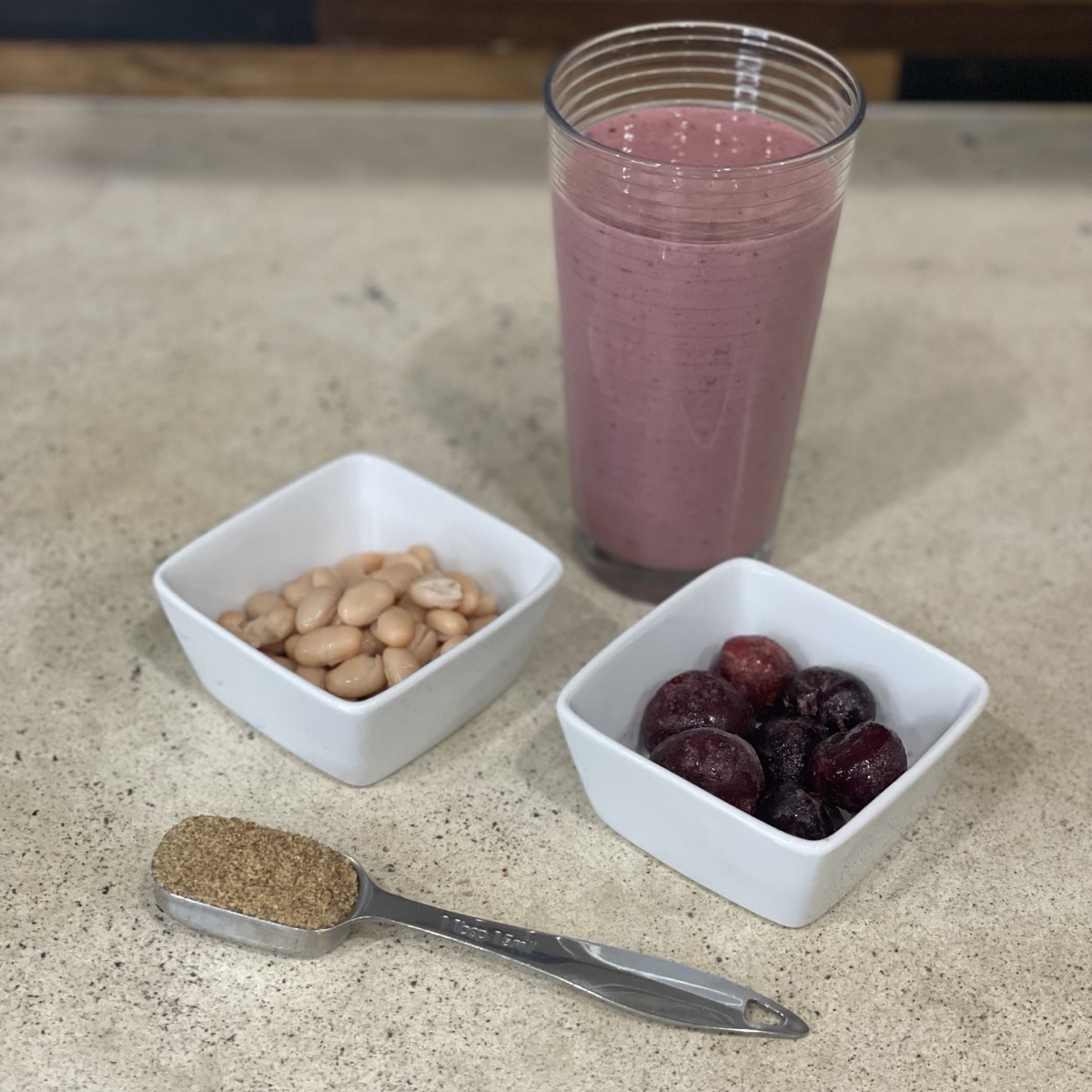
This is the one I make for myself. Two of the five of us would drink it again, and I was one of them. My boys were not sold. If you are making one smoothie for the whole house, the tropical or chocolate banana ones are the safer bet.
Who it’s for: Anyone who wants the most protein and fiber and is willing to try something less traditional.
What’s in it: 1 cup frozen cherry berry blend, ½ cup navy beans, rinsed, 5.3 oz (1 container) Chobani Less Sugar Madagascar Vanilla & Cinnamon, 1½ tablespoons natural peanut butter, ¾ cup almond milk, and 2 tablespoons ground flax.
Cost: $4.25
Don’t skip the peanut butter. It is what balances the bean, and this is the one recipe here where leaving something out changes the answer. I tried it before adding peanut butter, and the bean flavor was pretty strong. Beans, peanut butter, and unsweetened cocoa powder would be a tasty mix as well.
Half a cup of navy beans provides fiber-rich carbohydrates and plant protein, covering two of my four smoothie parts with one ingredient. The whole glass has 31 grams of protein and 16.2 grams of fiber for $4.25.
Rinse the beans until the water runs clear. This mellows their flavor and washes away some of the sodium from the canning liquid. I will use the rest of the beans as a side dish for myself for lunch, drizzled with olive oil, garlic powder, and black pepper.
Chocolate Banana Smoothie
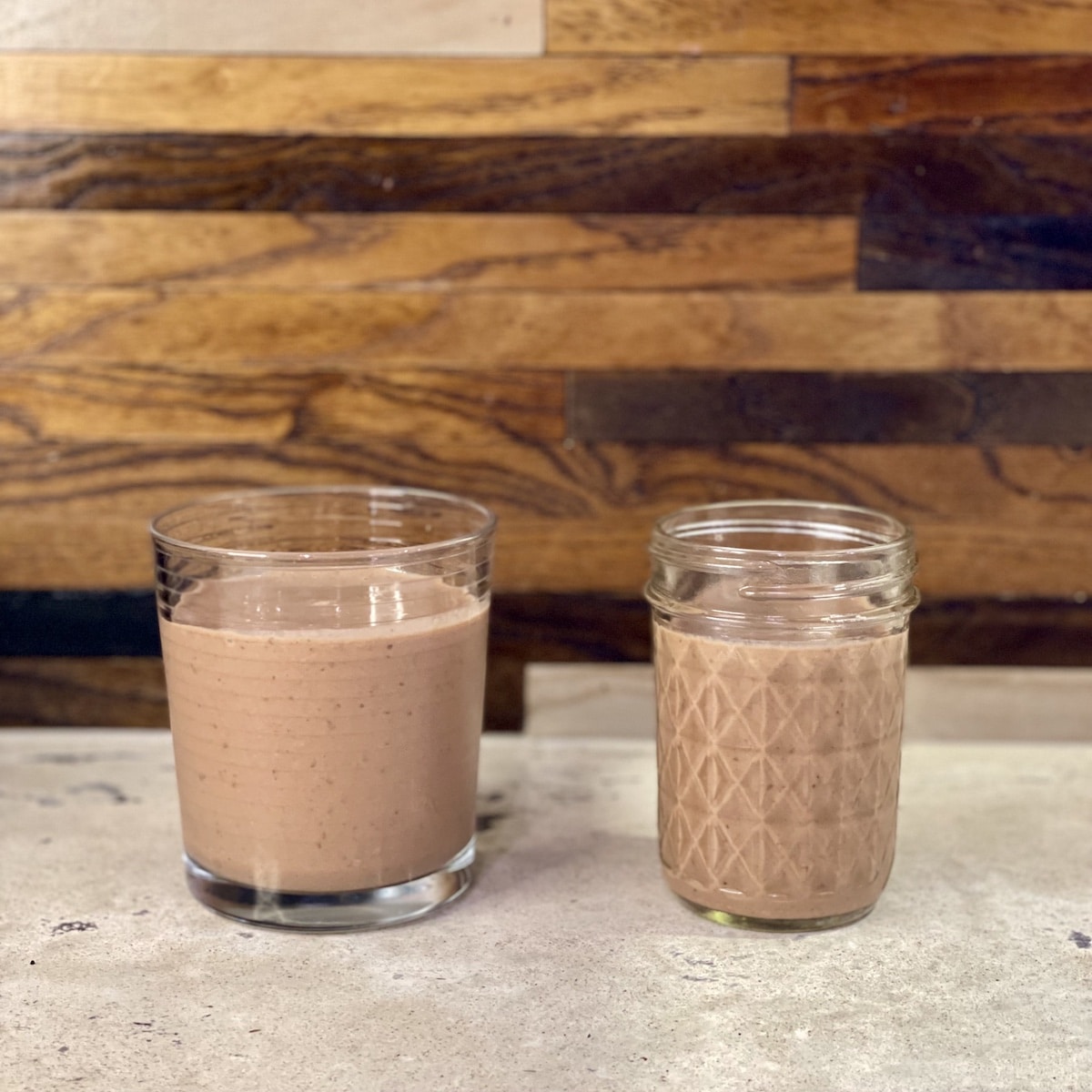
Start here if unsweetened smoothies are new to you. The banana does most of the sweetening, and the entire smoothie contains just 1 gram of added sugar.
Who it’s for: Anyone new to unsweetened smoothies. This is the gateway smoothie!
What’s in it: 1 cup 1% low-fat unsweetened plain kefir, 1 tablespoon unsweetened cocoa powder, 1 tablespoon ground flax seeds, 1 medium banana, 1 tablespoon natural peanut butter, and ½ cup water if it needs thinning.
Cost: $3.50
Buy natural cocoa powder rather than Dutch-processed. Alkalizing cocoa substantially reduces its flavanols. In one analysis, natural cocoa contained nearly nine times as much as heavily alkalized cocoa.
→ Full recipe, with the nutrient breakdown
Why I Don’t Put Greens in My Smoothies
I have tried blending greens into smoothies many times, but I simply do not enjoy them that way. I would rather [sauté greens] with olive oil and seasonings and eat them alongside eggs. If you enjoy green smoothies, that is a helpful way to eat more vegetables too.
Cooking can also make certain nutrients easier to absorb. For example, cooking carrots with olive oil can make some of their beta-carotene easier for your body to access. You can learn more in my comparison of raw versus cooked greens.
I do use frozen riced cauliflower in smoothies, especially for my kids, who don’t enjoy many cooked vegetables. You cannot taste it; it thickens the smoothie, and it gets a vegetable into the glass.
Make It Ahead
If mornings are especially hectic, or someone else in your household is making breakfast, assemble smoothie packs ahead of time. Place the frozen fruit, any vegetables, and ground flaxseed for each smoothie in a freezer bag or container. Label each pack with the smoothie name and the amount of liquid or yogurt it needs, then lay it flat so it stacks easily.
In the morning, add the kefir, Greek yogurt, or milk to the blender first. Empty in the frozen smoothie pack and blend. If the ingredients have frozen together in one solid block, let the pack sit on the counter for a few minutes before blending. This saves measuring, cleanup, and one more decision on a busy morning.
Swap in What You Have
| Out of… | Consider swapping in… |
| Frozen fruit or vegetables | Use fresh fruit or drained canned fruit and add ice to create a colder, thicker smoothie. |
| Ground flaxseed | Chia seeds provide similar fiber and thickening. Hemp hearts add protein and healthy fats but will not thicken the smoothie as much. |
| Kefir | Use cow’s milk or a higher-protein plant milk. Plain yogurt also works, but you may need to thin it with milk or water. Greek yogurt will make the smoothie especially thick. |
| Peanut butter | Try almond, cashew, or sunflower-seed butter. A strong blender can also handle whole peanuts, almonds, or walnuts. |
| Cherries or tropical fruit | Substitute an equal amount of another fruit you already have. I would keep the navy beans with cherries or berries and the riced cauliflower with tropical fruit because those are the combinations I tested. |
| Protein powder | Add it when you need more protein or staying power. Read my Mediterranean smoothie article for how to choose and use one. |
Frequently Asked Questions
Can You Put Beans in a Smoothie?
Yes. Mild white beans can blend completely smooth while adding fiber and plant protein. In this recipe, ½ cup worked once I added peanut butter to balance the bean flavor. Rinse the beans until the water runs clear before blending. Not everyone in my house was convinced, but I would drink it again. You could also try Great Northern beans or Cannellini beans.
My kids never notice white beans in muffins, or black beans in dark chocolate muffins.
Will a Smoothie Spike My Blood Sugar?
It can, depending on the ingredients, serving size, and your individual response. However, blending is not the same as juicing because the fruit’s fiber stays in the smoothie. One small study found no greater glucose rise from blended apples and blackberries than from eating them whole.
Adding protein, fat, and more fiber also creates a more balanced option than blending fruit with juice alone. I wore a continuous glucose monitor while eating normally and shared my real-life results here.
Takeaways
Every smoothie here starts with the same three things: something cultured, such as yogurt or kefir, ground flaxseed, and frozen fruit. Learn that base, and you can stop following recipes so closely.
Berry Powerful is the cheapest at $2.40 and has the shortest ingredient list. The navy bean smoothie has the most protein and fiber. The tropical smoothie is the family favorite, and chocolate banana is a good place to start if unsweetened smoothies are new to you.
You do not need a new plan or shopping list to begin. Open the freezer tonight and use what you already have. The pattern matters more than the perfect combination.
If you want more ideas, all my anti-inflammatory recipes are gathered in one place.